
Iceland’s Economic Meltdown

May 25, 2012 8:00 am

A meteoric rise to prosperity is followed by an equally rapid economic descent

Written by Tejas Shah, Staff Writer
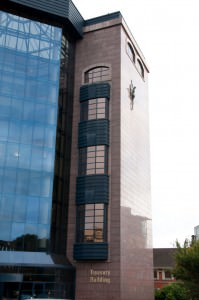
Iceland Treasury Building by Randy Storey (Flickr)

http://www.flickr.com/photos/randystorey/6139783202

Traditionally, Icelanders were never pampered with the fast cars and large homes that their American and European counterparts enjoyed. The nation was a close-knit group, with a population slightly larger than Pittsburgh, Pennsylvania, economically dependent on the fishing industry and bio-fuel generated by the active volcano on their land. However, the onset of a number of fortuitous circumstances allowed the tiny island nation to experience a dazzling rise to prosperity before falling victim to a major economic meltdown in 2008. How can we account for such a dramatic turn of events?

Iceland’s celebrated rags-to-riches story began in the Nineties when free market reforms, fish quota cash and a stock market based on stable pension funds enabled Icelandic entrepreneurs to invest in international credit. This was new to most Icelanders because they previously lacked the capital and disposable income necessary to make investments. Icelanders mostly invested in Britain and Denmark; for example, in 2004, Icelanders spent £894m on shares in British companies. These investments proved to be successful because in just five years, the average Icelandic family saw its wealth increase by 45 per cent.

Iceland’s corporate debt leverage exceeded its GDP by 300%, which was an astounding 4 times greater than the US corporate debt leverage.

Having ranked 3rd in the United Nations’ 2009 Human Development Index, the complete collapse of Iceland’s financial system four years ago is grave reminder of the immense impact of the global economic crisis. No country was affected as dramatically as Iceland, which saw its inflation rise by over 18% in 8 months, and the stock market drop by over 90% towards the end of 2008.

So, what actually triggered this major collapse? During the years leading to the downfall, Iceland’s corporate debt leverage exceeded its GDP by 300%, which was an astounding 4 times greater than the US corporate debt leverage. This astronomical level of debt was financed by the chartered banks through mostly foreign denominated currency; one of the most volatile means of financing. Icelanders were assured safety by the banks because of the existence of the IMF (International Monetary Fund) which serves to bail out sovereign states at the international level. This induced people to heavily invest in foreign currency which crippled their long-term investments during the economic downfall.

The second trigger was parliament’s inability or reluctance to scale back foreign investment when price inflation increased and the value of the króna depreciated because foreigners started to feel nervous about Iceland’s sudden rise to prosperity. This period was infamously dubbed the Geyser crisis since investors suddenly started purchasing credit default swaps to compensate for potential losses.

The last trigger was the heavy investment in subprime mortgages that backfired in August 2007 when BNP Paribus suspended Iceland’s 3 major investment funds heavily invested in the subprime market. This was the last straw.

Almost a year later, Bear Stearns went bankrupt and investors immediately started pulling out of Iceland. Despite public relations moves by the Icelandic government, investor confidence was not renewed. According to Armann Thorvaldsson, the former head of the UK branch of Kaupthing, Iceland’s largest bank, one of the biggest mistakes they made during the crisis was not cutting down the “stock market positions of [their]best clients more aggressively.” This exacerbated the conflict because
while stock market positions began to deteriorate, the bank continued to support them.

So, who’s to blame? Fingers point in many directions. In March, Iceland became the first country to launch a criminal trial against their former Prime Minister, Geir H. Haarde, for his inept decision making and failure to prevent the escalating crisis.


“None of us realized at the time that there was something fishy within the banking system itself, as now appears to have been the case,” Geir Haarde told the court when the trial began.

In some ways, he was right. Since everything was working well, no one wanted to believe that the nation’s sudden rise to prosperity was only a mirage. Unfortunately, the unthinkable happened and today, Iceland stands in the ruins of the economic meltdown that rippled throughout the globe.

ARB Team
Arbitrage Magazine
Business News with BITE.

Liked this post? Why not buy the ARB team a beer? Just click an ad or donate below (thank you!)

Liked this article? Hated it? Comment below and share your opinions with other ARB readers!

Featured Posts

  • General Lifestyle Student Resources Trends ABC’s to Sticky Teaching

    ABC’s to Sticky Teaching

    Everyone has their own way of taking in new knowledge but, have you ever wonder if there is a golden trick of learning? This infographic will teach you the ABC’s of sticky teaching and explains what a brain cannot ignore when it comes to learning.

    Read more →
  • General Lifestyle Science & Technology Technology Trends The Rise of Silver Surfers

    The Rise of Silver Surfers

    When was the last time you saw grandma staying at home knitting? Take a second thought and you might realize that what she was holding on her hands were not the knitting yarn, but rather it was a smartphone or a tablet! Not only does the younger population spend time on the Internet, this Infographic shows the growing number of new-tech users to be those over the age of 50.

    Read more →
  • Business Canada Culture Finance & Economics General Spotlight Topics LCBO Strike Looms Over May Long Weekend

    LCBO Strike Looms Over May Long Weekend

    Customers have been encouraged to stock up as LCBO employees plan to walk off the job By Kevin Chao, staff writer Before you pick up party cups or invite friends over for drinks this long weekend, be sure to stock up on booze. LCBO workers are expected to go on strike this Friday, just before the Victoria Day weekend. Negotiations are currently taking place between the LCBO and the Ontario Public Service Employees Union (OPSEU), but reports suggest that a [...]

    Read more →
  • Business TTC Pedals towards a Merge with Bixi Toronto

    TTC Pedals towards a Merge with Bixi Toronto

    TTC’s Potential Merger with Bixi – a Questionable Move By Viviane Fairbank, Staff Writer Bixi Toronto’s financial troubles may soon be over as the TTC explores the possibility of a merge between the two public transit systems. Karen Stintz, chair of the TTC, told CP24 that she intends to “move a motion to request a review of whether the TTC could actually take over the BIXI portfolio” during a recent council meeting. Stintz reasons that an added component of Bixi [...]

    Read more →
  • Arb TV Why We Should Abolish Corporate Income Tax

    Why We Should Abolish Corporate Income Tax

    Economist Daniel Altman explains how the United States have a very complex tax system, where it takes hours for you to fill out your returns (one for each of your sources of income, filing state taxes separately, and even local taxes seperately if you have them). So, let’s get rid of corporate income tax! I mean, who pays it? People who have company shares? Or employees? If a company spends all of its income and has no profits, they don’t [...]

    Read more →
  • Arb TV Dressing Right For Interviews, Ladies Edition

    Dressing Right For Interviews, Ladies Edition

    A few tips can make a great first impression; dressing professionally and appropriately is key, whether you’re candidating for a CEO position or a McDonald’s Big Mac-maker. Let’s start at the top. Hair should be neat, tidy, and as close to your natural shade as possible. On the face, little makeup is required to look mature, but stay away from harsh, bright colours. Speaking of colours, paint your nails! If you don’t have the time, or are like me and [...]

    Read more →
  • Arb TV This Is How Advertisements Suck

    This Is How Advertisements Suck

    Advertisers care about everything: how old you are, how much money you make. They want you to slip into watching content but also, their ads–”lean back entertainment” especially of TV. But if you think about it, the TV shows right now that have the most community gathering are not on cable, and thus are not funded by advertisements. Exhibit A: Dr. Who. They don’t realize it’s not the amount of viewership who tune in every evening, it’s the commitment of the community. [...]

    Read more →
  • Technology The BlackBerry Q10 and R10

    The BlackBerry Q10 and R10

    BlackBerry is unveiling new smartphones: but will it be enough to save this fledgling company? By Aziel Goh, Staff Writer It’s no secret that BlackBerry’s (previously Research in Motion), previous dominance in the smart phone industry, has collapsed. They have experienced a drastic fall in market share and sales due to the increased competition from newer competitors – namely Apple and Android. However, BlackBerry has refused to bow out of the lucrative, and expanding, smartphone industry. Earlier this year, BlackBerry [...]

    Read more →
  • Features GEIC Conference offers solutions for Toronto

    GEIC Conference offers solutions for Toronto

    Paul J Bedford, a global engineer, comes to the University of Toronto GEIC Conference to discuss how transportation to and from the university can be improved.

    Read more →
  • Finance & Economics Topics Building Financial Security in Developing Countries

    Building Financial Security in Developing Countries

    Microsaving and Mobile Banking Paving the way for Financial Security By Melissa Goertzen, Staff Writer The global financial crisis has led to the rediscovery of a basic tool of personal finance: the piggy bank. Economic uncertainty has placed a renewed focus on the value of building savings in order to achieve financial security. In developing countries, this has meant a growing emphasis on microsavings programs. The idea that savings can combat poverty is challenging decades of research that suggested loans [...]

    Read more →