



 Loading.....
Why People Love Money
You can’t eat it, drink it, or use it directly for anything. And yet we all work our butts off, 9-to-5, for it.
By Nicki Mossavarrahmani, Staff Writer
Design by Jeff Fritz
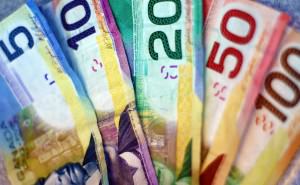
Image from Flickr, by meddygarnet
“You can’t eat it, drink it or use it directly for anything. It’s a poor substitute for wood when starting a fire. And yet we all work our butts off, 9-to-5, for it. Money. You know, that thing that really makes the world go round.”
Money.
You know, that thing that really makes the world go round.
But let’s start by taking a step back. What is money? How does it work?
Money is generally considered an object that circulates widely as a means of payment. Broken down further, there are actually two types of money: commodity money and fiat money.
Today, use of commodity money can be seen in prison. There, cigarettes can be used to trade for goods and services but it can also be consumed for ones utility. Then there is fiat money (i.e. a form of money, like a $20 bill, declared as legal tender by the government), which is intrinsically useless and does not have any direct utility. So then why would anybody want to hold fiat money?
Money has three functions: it’s a store of value, a unit of account, and a medium of exchange.
To act as a store of value, money must be able to be reliably saved, stored, and retrieved.
A unit of account is a monetary measurement of the market value or cost of goods, services, or assets. It gives meaning to profits, losses, liability, or assets.
The third function of money, medium of exchange, is a sole feature of money. It thereby avoids the inefficiencies of a barter system, such as the ‘double coincidence of wants‘ problem.
This problem lies in the improbability of the wants, needs, or events that cause or motivate a transaction occurring at the same time, same place and by the same people. For instance, an economics professor may have economics lessons to offer but in exchange would like to purchase a car. However, the student that would like to purchase a lesson cannot offer a car in return. This dilemma causes inefficiencies in the economy and leads us back to reasons as to which people prefer to hold money (as they can use it for any purpose).
[pullquote]The increased buying power, freedom, and control consumers have using money is what motivates and maintains fiat money.[/pullquote]
In fact, let’s assume for a second that we do not have money to use as a means of exchange and we revert back to the barter system. Let’s explore the consequences.
As individuals partake in fewer economic transactions the economy gets closer to what is called autarky. This represents a state when individuals are unable to make mutually beneficial trades and as a result each individual can only consume what he or she produces and nothing else.
Consumer theory holds us to that consumers prefer to have diversity in their consumption. For instance, farmer Joe produces only wheat but would like a variety of goods and services such as clothing.
However, since the barter system brings us closer to autarky due to restrictions in trade, that means that farmer Joe will have lower variety of goods and services which translates into lower utility in his lifestyle. Therefore, when Joe is faced with the option of holding money versus barter, he will choose money.shelter, meat and furniture.
But what is it about today’s fiat money—these easily destroyable pieces of paper—that makes it so valuable?
Simply our belief in its value.
If one believes that fiat money will not be valued in the future, then fiat money will have no value in the present. No one would be willing to give up goods and services for money. If people’s belief in the value of money disappears, it becomes a self-fulfilling prophecy.
So what happens when our belief in (fiat) money is shaken?
Inflation is a good example of something that deteriorates people’s belief in the value of money. If in the next period your money is worth less, you will be inclined to hold less of it. Therefore, inflation is one of many determining factor in how much money people would like to hold.
On the other hand, when people’s belief in money is strong, when we really love our money, people tend to hold onto their money. Some economists suggest that this is because the demand for money is a function of two variables: interest rates on close substitutes to money like bonds and the level of income.
//
//
Higher income means a higher demand for holding money as the number and value of ones transactions increase. On the other hand, if an individual sees a higher return from an interest-yielding asset instead of the interest given by the bank, the individual is likely to hold less money in liquid form (coins and bills).
Meanwhile, other economists believe that different motives (three in all) lie behind peoople’s desire for money. These motives include: the “transactions” motive (having sufficient funds for day-to-day individual and business purposes); the “precautionary” motive (having money on hand for unforeseen circumstances); and the “speculative” motive (holding money because prices of your desired goods may decrease).
Since people’s desires to hold money rely on these motives, when these motives grow stronger, people will hold on to more money, which results in a drop of total individuals and business expenditure.
On the other hand, when these motives weaken, you can see an increase in total expenditure.
In the end though, even if we were to abolish money, it would always be reinvented in some way, for money is not a particular thing.
Money is an idea.
Dollars, pounds, lire, whatever it may be, as long as we are bound by markets, by trade to share resources, money in any of its forms will always be something we lust after.
Sources
———–
ARB Team
Arbitrage Magazine
Liked this post? Why not buy the ARB team a beer? Just click an ad or
















Share the post "Why People Love Money"