




 Loading.....
Can Boomers Cause Capital Markets to Crash?
“If baby boomers retire and sell off their assets, this will drive down stock prices, causing a fall in the markets worldwide.”
The Snake, The Rabbit and the Stock Market
By Victoria Chau, Staff Writer
Design by Ryan Trinidad, Art Director
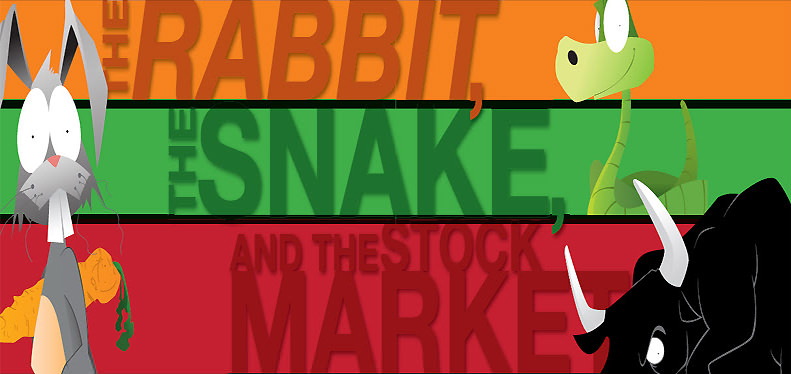
What is the market meltdown hypothesis? Simply put, it’s the fear that upon retiring, the millions of baby boomers worldwide will sell off their risky assets (stocks) for safer assets, driving the prices of equities down until the market crashes. Concern for this is rising, as over the previous year the large baby boomer cohort that is scattered throughout the developed world began to retire. Should we be afraid?
To understand the reason for the fear, or to rationalize it away, we must look at the foundations behind this hypothesis and why it may or may not hold true. Let’s begin with the birth of all the baby boomers, as that’s where we can start to develop a sound background as to the impact of baby boomers on the past and our looming future.
The Snake and the Rabbit
Between 1946 and 1964, the world saw the birth of the boomers, a generation characterized by unusually high number of births. This generation is also known as the rabbit that was swallowed by the snake, as the bulge that is created by the rabbit in the snake’s body is likened to the peaks that the baby boomers created in the demographic curve.
Some argue that correlations can be drawn between the financial markets and the stages in life that the baby boomers go through. Let’s begin in the mid-1940s when the baby boomers were born. During this time up until the mid-1960s, the financial markets were boosted by the parents of baby boomers investing for their children’s education. Come 1965 to 1980, baby boomers married and prepared for their own families by investing in housing rather than financial assets, causing housing prices to rise and stock prices to drop.
[pullquote]It is possible that the once desirable Freedom 55 will have to become Freedom 75, 85 or even possibly 95 for those who just cannot afford to retire?[/pullquote]
In the 1980s, when the baby boomers entered their late 30s and early 40s, investment for their own retirement and their children’s education became a priority. Some believe that this investment is the cause of the rise in stock prices during the 80s and 90s in the developed countries and the lowering of housing prices.
So the big question is what happens to the stock market when the baby boomers begin to retire in 2010? The major fear is that the market meltdown hypothesis will come true. The market meltdown hypothesis predicts a fall in stock prices as retired baby boomers withdraw their money from risky financial assets to transfer to safer financial instruments such as bonds.
If baby boomers retire and sell off their assets, this will drive down stock prices causing a fall in the markets worldwide. The basis of this argument is that the baby boomer generation represents a large cohort with their retirement savings tied up in the financial markets. When they try to sell all their assets to prepare for retirement, they will be selling to a younger and much smaller cohort who will simply not have the demand to meet the supply. Economics 101 tells us that when supply is greater than demand, prices must fall.
And thus, a market meltdown ensues.
Getting the Rabbit Down
As baby boomers go through their personal life cycles, they also embark on an investment life cycle. This is akin to the rabbit slowly moving through the snake’s body until it is fully digested. An investment life cycle characterizes the type of behaviour a person engages in depending on where they are in the cycle.
 As any Introduction to Finance course will tell you, a typical person begins investing in their 20s and 30s. At this age, the investment is not in the financial market but the housing market. It is a time when people are typically getting married and building families, requiring most of their income to go towards a place to live.
Once an investor ages and begins to realize that there are a limited amount of paydays remaining, investing for retirement becomes much more important. This is, of course, among other investments such as savings for a child’s education. The closer an investor comes to retirement, the higher their level of risk aversion becomes.
The objective of this investment life cycle is to create a smooth road on which to have a consistent standard of living even when retirement occurs. Thus, it would make sense that as a person gets older they want to ensure the safety of their standard of living and will consequently switch to invest in assets that are less risky.
[pullquote]If baby boomers retire and sell off their assets, this will drive down stock prices, causing a fall in the markets worldwide.[/pullquote]
The disparity between the high demand and low supply of the safe asset—we’ll use bonds as an example here—pushes the price of a bond higher, leaving the overall return on the bond lower than previous years. This process causes the savings of retiring baby boomers to settle at a lower level than their parents’ savings, which will cause a whole other set of problems that deal with retirees in need of financial assistance.
Robin Brooks’ report conducted in the year 2000 on “What Will Happen to Financial Markets When the Baby Boomers Retire?” finds that the age distribution of a population has a very real impact on asset returns. Brooks’ study discovers that this correlation between age distribution and asset returns is inherent in the investment life cycle. As a large portion of the population ages, their demand for safer assets consequently decreases demand for equities, subsequently driving the overall stock market down with stock prices.


















Share the post "Can Boomers Cause Capital Markets to Crash?"